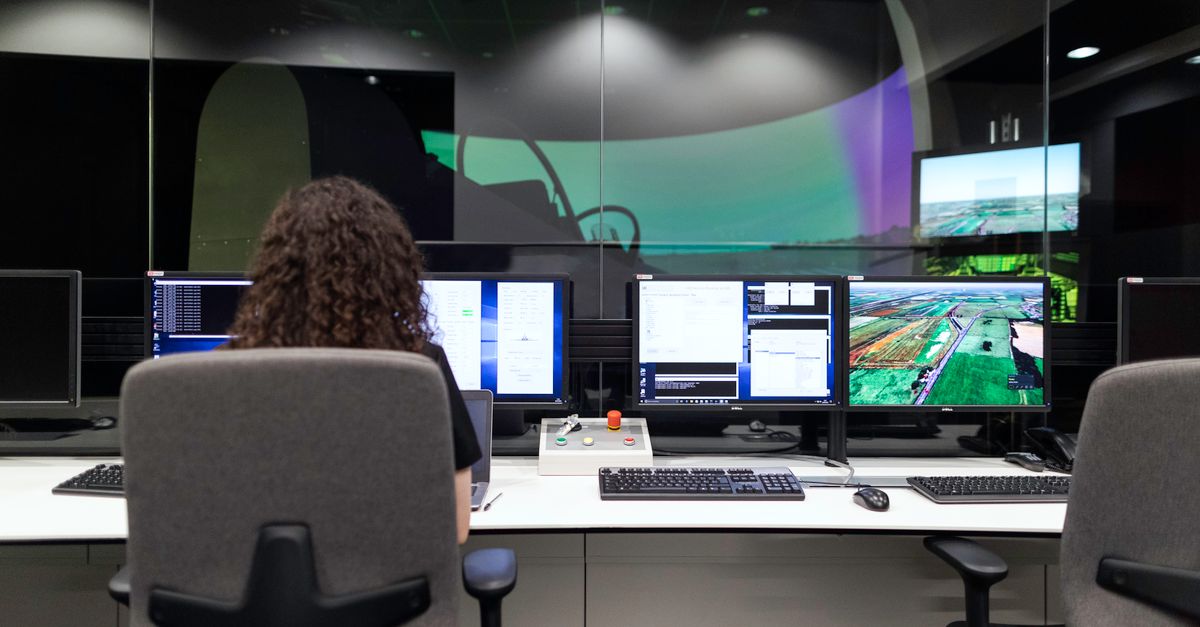
Google has expanded the capabilities of its Gemini 3.5 Flash model to include computer use functionality, allowing the AI system to interact directly with digital interfaces and perform tasks across applications. According to Google DeepMind, this capability brings advanced automation features to a lightweight model designed for speed and efficiency.
The addition marks a significant expansion of what Gemini 3.5 Flash can accomplish. Previously limited to text and basic analysis, the model can now understand visual information on screens, interpret user instructions, and execute actions through standard computer interfaces. This positions the technology for deployment in scenarios where response time matters and computational overhead must remain minimal.
Practical Applications and Use Cases
The computer use feature opens several practical pathways for businesses and developers. Companies could automate routine administrative tasks like data entry, form completion, and cross-application workflows without requiring custom integrations. Customer service operations might leverage the technology to handle inquiries spanning multiple systems simultaneously.
The capability also enables new accessibility applications. Users with mobility limitations could receive assistance navigating complex software interfaces, while developers can build tools that reduce friction in knowledge work.
Technical Approach and Design
The implementation allows Gemini 3.5 Flash to process screenshots, understand interface layouts, and generate appropriate mouse and keyboard commands in response to user prompts. The model interprets visual context to determine what actions are necessary and executes them in proper sequence. This approach differs from API-based automation by treating the computer screen as a universal interface that any software can present.
Keeping this functionality within a faster, more efficient model represents an engineering challenge. Gemini 3.5 Flash was designed to prioritize speed and cost efficiency compared to larger variants. Adding computer control without degrading these characteristics required careful optimization.
Competitive Landscape
The move reflects intensifying competition in the generalist AI market. Other major AI laboratories have explored similar capabilities, recognizing that the ability to act on digital environments represents a meaningful expansion of practical utility. However, implementation details and performance characteristics vary significantly across approaches.
The decision to integrate computer use into a lightweight model specifically challenges the assumption that such advanced capabilities require maximum model scale. This could reshape how companies think about deploying AI systems, potentially reducing infrastructure requirements for automation-heavy workloads.
Broader Implications
The capability raises questions about AI safety and oversight in production environments. Giving AI systems autonomous control over computer interfaces requires robust safeguards to prevent unintended actions or misuse. Google's implementation likely includes various constraints and monitoring mechanisms, though specific details about these safeguards remain limited.
- Computer use extends to standard desktop and web interfaces
- Integration available for developers building on Gemini models
- Designed to work alongside existing Gemini 3.5 Flash capabilities
- Positioning the model for enterprise automation scenarios
The expansion of Gemini 3.5 Flash represents Google's strategy to build increasingly practical AI systems that handle real-world tasks without requiring exponentially greater computational resources. As AI systems move from analysis to action, their integration into daily workflows will depend on both technical capability and demonstrated reliability.