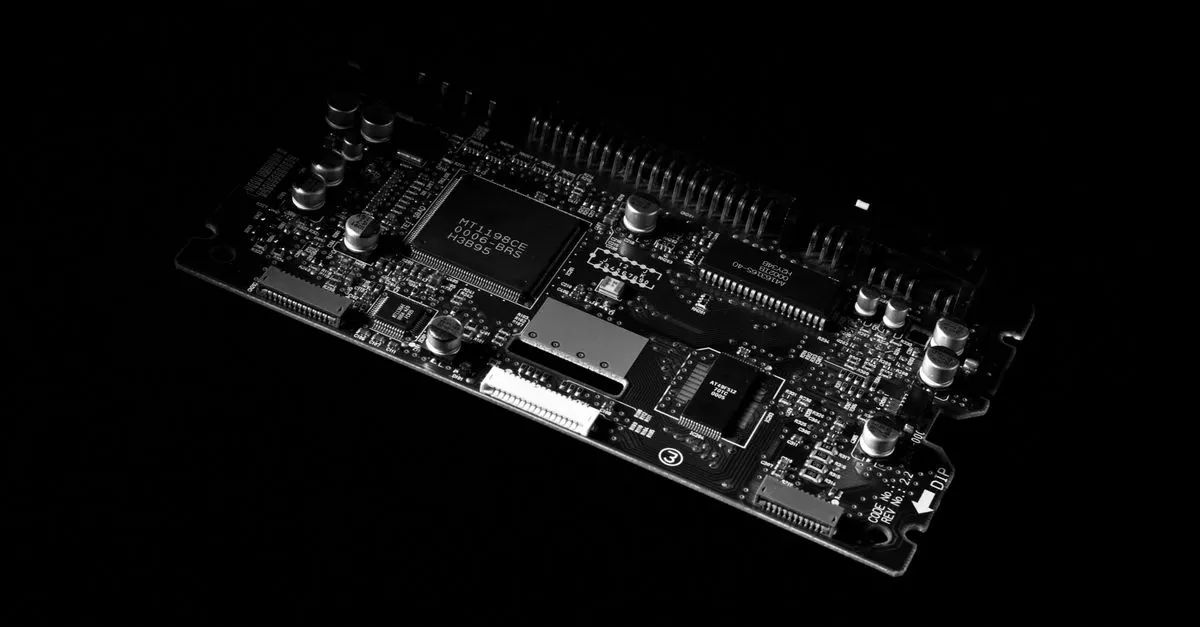
The semiconductor industry's race to feed artificial intelligence systems has identified a new pressure point: high-bandwidth memory (HBM) production capacity. Micron Technology's decision to invest $9.3 billion in expanding its manufacturing operations in Hiroshima, matched by roughly $500 million in Japanese government support, underscores how memory,rather than compute chips themselves,has become the bottleneck constraining AI infrastructure deployment.
Unlike announcements of new foundries or logic fabrication plants, this expansion carries outsized significance for the AI sector. Data center operators building large language model training clusters and inference systems have discovered that cutting-edge GPUs and TPUs cannot reach their full performance potential without sufficient high-bandwidth memory bandwidth. The memory interface speed and capacity directly limit how quickly these processors can access the vast parameter sets that modern AI models require.
Timeline Carries Real Risk
According to AI Weekly, Micron has targeted summer 2028 for initial production shipments from the expanded facility. That schedule matters because the company's track record suggests some caution is warranted. Previous plans for an additional DRAM manufacturing plant on the same campus have already slipped into 2027, indicating that facility expansion timelines at this scale frequently encounter unforeseen challenges.
Industry observers should watch for several signals about whether Micron can maintain its 2028 commitment:
- Equipment procurement and installation progress reports
- Hiring announcements for specialized engineering and operations staff
- Any revisions to the announced production ramp timeline
- Customer pre-booking commitments from major AI infrastructure providers
Broader Supply Chain Implications
The Japanese investment reflects both the geographic concentration of advanced chip manufacturing and the global competition for AI readiness. South Korea's Samsung and SK Hynix, along with Taiwan's TSMC, have similarly announced capacity expansions aimed at the AI market. Each month of delay ripples through the supply chains of cloud providers, AI chip startups, and enterprise data center operators.
HBM technology itself represents a generational shift in memory architecture. Unlike traditional DRAM, high-bandwidth memory stacks memory cells vertically and uses advanced interconnect technology to achieve substantially higher data transfer rates. This efficiency proves essential for AI workloads where memory bandwidth often determines throughput rather than processing speed alone.
The alignment of Japanese government funding with Micron's capital commitment also signals how national policy makers increasingly view semiconductor capacity as strategic infrastructure. This mirrors similar support programs announced by the U.S. CHIPS Act and European initiatives designed to reduce dependence on single-region manufacturing.
What Comes Next
The real test arrives in 2027 and 2028 when competing capacity expansions from multiple vendors begin reaching production. If Micron's timeline holds, the Hiroshima facility could meaningfully ease one constraint in AI infrastructure supply. If delays accumulate, the memory bottleneck may persist longer, constraining AI model training scale and inference deployment speed across the industry.