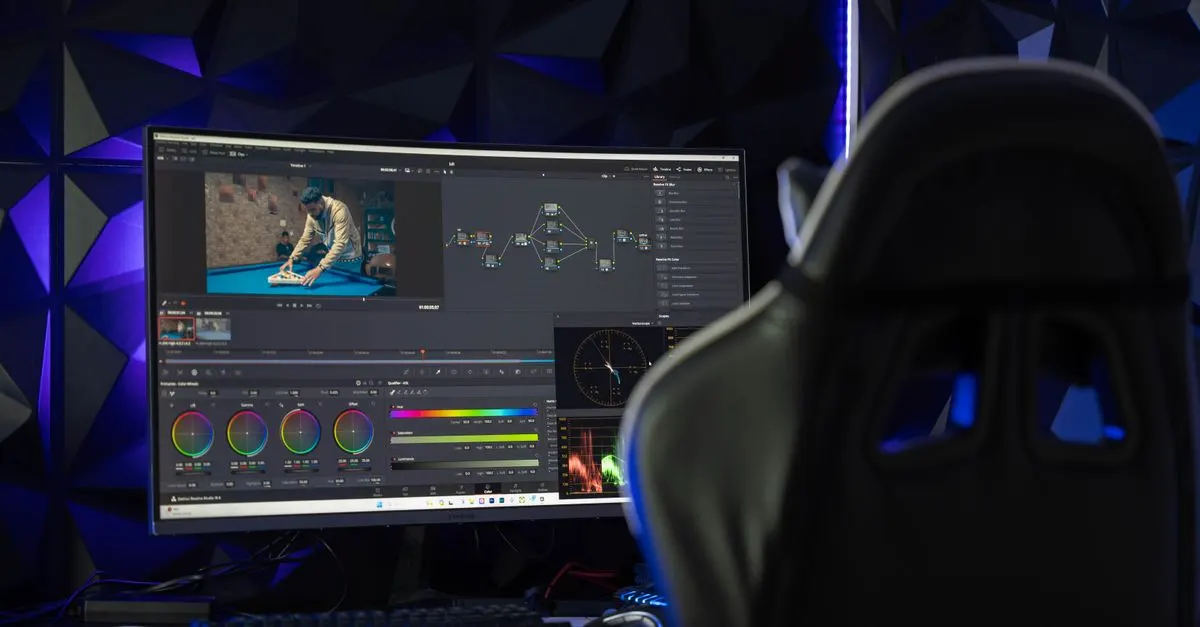
Researchers Accelerate Video Generation With Latent Memory Model
New framework cuts computational costs tenfold by storing scene data in AI latent space instead of pixel space.
Papers, breakthroughs, benchmarks, and the long-arc trends shaping artificial intelligence. arXiv highlights and lab announcements, distilled.
New framework cuts computational costs tenfold by storing scene data in AI latent space instead of pixel space.

A new paper questions whether large language models truly possess human-like attributes or whether we're applying flawed reasoning to their capabilities.
RTX Spark laptops could reshape AI computing on consumer devices by leveraging Nvidia's software dominance and industry relationships.

New framework uses a model's own uncertain predictions to fetch better information mid-generation, achieving 8x faster inference.

Researchers expose critical gaps in AI detection by studying how algorithms perform across progressive human-AI document revisions.

Researchers introduce PAR3D, a framework that helps AI systems recognize and reason about individual components of objects, not just whole objects.

Researchers introduce a game-theoretic metric that better captures how AI systems adapt to strategic opponents in repeated interactions.

Researchers introduce TempoVLA, enabling single AI models to control robot execution speeds dynamically for safer, more efficient manipulation tasks.

New hypernetwork approach generates lightweight adapters that let AI coding tools understand evolving codebases without expensive retraining.
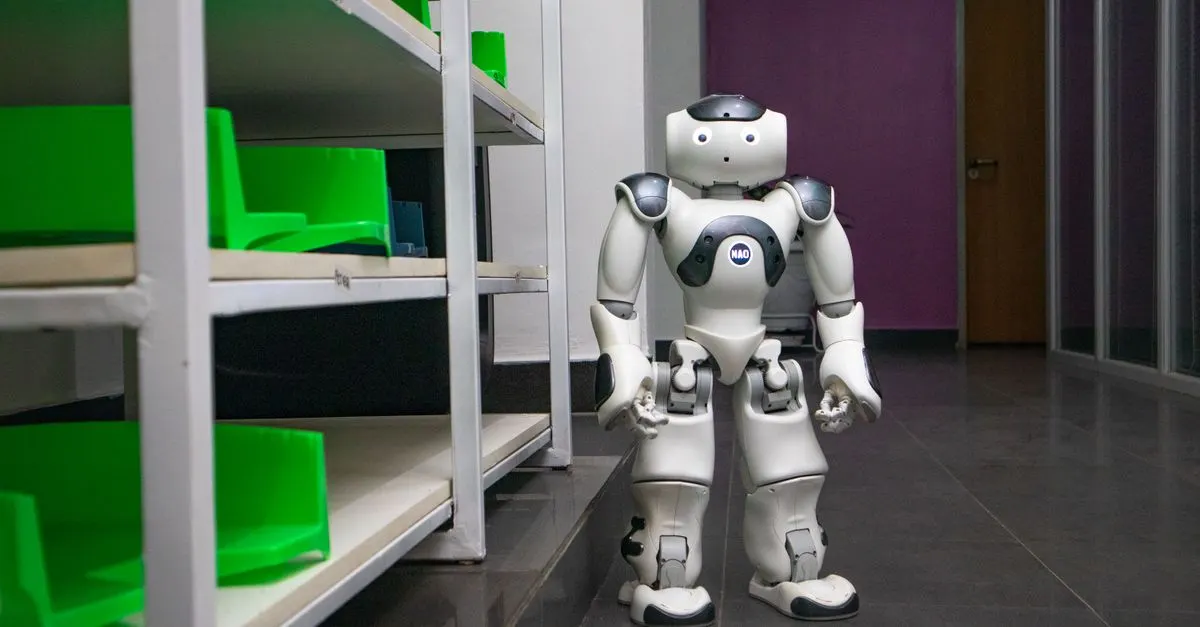
Researchers develop a unified control system that enables robots to perform diverse manipulation skills without task-specific training.

Researchers introduce TailLoR, a technique that preserves core knowledge while efficiently adapting neural networks to new tasks.
Researchers introduce a supervision technique that helps vision-language models imagine unseen perspectives, outperforming traditional text-based reasoning approaches.
Researchers show that basic input enhancements let legacy architectures match state-of-the-art performance without major redesigns.

Researchers propose a smarter way for multimodal AI systems to acquire new vision-language skills without corrupting existing knowledge.

Researchers introduce a method that synthesizes realistic robot training footage to reduce expensive real-world data collection for manipulation tasks.
Researchers build interpretable anomaly detection system that rivals larger models while using a fraction of the parameters.

DynaFLIP embeds action-awareness into visual perception, helping robots generalize better to real-world manipulation tasks.
Researchers develop a method to reverse-engineer what public and proprietary language models learned from during training, addressing a major AI transparency gap.